A roof is one of those parts of a house where the difference between competent work and mediocre work isn’t obvious right away. Unlike a bad paint job or crooked tile, a poorly installed roof can look completely fine for a year, sometimes two, before the shortcuts start showing up as leaks, premature shingle failure, or damage that spreads into the attic and walls before anyone realizes something was wrong from the start. This delay is exactly why hiring genuine expertise matters so much more with roofing than with a lot of other home projects, and why the cheapest quote on the table isn’t necessarily the one that saves money in the long run.
Why Roofing Mistakes Take Time to Surface
Shingle installation looks simple from the ground, rows of overlapping material nailed down in a pattern, but the details that actually determine how long a roof lasts are almost entirely invisible once the job is finished. Fastener placement matters more than most homeowners realize. Nails driven too high on a shingle, or at the wrong angle, don’t hold as securely through wind events and can work themselves loose over several seasons rather than failing immediately. Flashing installed without proper layering under the shingles rather than simply caulked on top might shed water fine during a light rain and fail completely during a heavier storm, months or years after installation. Ventilation gaps that are undersized or blocked don’t cause an immediate problem either, they just slowly shorten the life of the shingles above them and raise the risk of ice damming each winter, effects that only become obvious well after the crew and their truck are long gone.
This is the core reason experience matters so much in this specific trade. A crew that’s installed hundreds of roofs across a range of house styles and weather conditions has usually already made, and corrected, the mistakes that a less experienced crew is still going to make on someone else’s house. The consequences of inexperience in roofing don’t show up on invoice day, they show up two winters later as a leak that traces back to a decision made during installation that nobody flagged at the time.
What Actual Expertise Looks Like on Site
A genuinely skilled roofing company tends to show its competence in ways that are easy to miss if you don’t know what to look for. They ask questions about the attic before quoting, since ventilation and insulation directly affect what the roof needs, rather than jumping straight to a shingle brand and price. They walk the entire roof rather than eyeballing it from the ladder or the ground, and they’re willing to explain, in plain language, what they’re seeing and why it matters. When they find something unexpected once tear-off begins, rotted decking, inadequate ventilation, flashing that was never installed correctly the first time, they flag it immediately with a clear explanation rather than either ignoring it or using it as an excuse to inflate the bill without justification.
The materials and techniques used also tend to separate experienced crews from rushed ones. Ice-and-water membrane at the eaves and valleys isn’t optional in this climate, and a company that treats it as a standard part of every job, rather than an upsell, is signaling that they understand what actually causes roofs to fail here. Proper starter strips, correctly overlapped underlayment, and nailing patterns that match manufacturer specifications rather than whatever’s fastest are all details that don’t show up in a sales conversation but absolutely show up in how the roof performs a decade later.
The Cost of Getting This Wrong
Hiring the wrong company doesn’t usually announce itself as an obvious disaster. More often, it shows up as a roof that needed its first major repair at year twelve instead of year twenty, or a warranty claim that gets denied because the installation didn’t meet the shingle manufacturer’s requirements in the first place, something many homeowners don’t realize can void a product warranty entirely. It shows up as ice damming every winter that a well-installed, properly ventilated roof wouldn’t have, or as a leak that keeps returning to roughly the same spot no matter how many times it gets patched, because the underlying flashing detail was never done correctly and each patch is addressing a symptom rather than the actual cause.
These outcomes are frustrating precisely because they’re avoidable, and because the homeowner usually has no way of knowing at the time of hiring that a mistake is being made. This is part of why credentials and track record matter more in roofing than the polish of a company’s marketing. A well-designed website and a fast callback don’t say anything about whether the crew showing up understands proper flashing technique, but a track record of jobs that have held up over many years, verified through references and community feedback rather than curated testimonials, tells you something much closer to the truth.
How to Actually Vet Expertise Before Signing Anything
Asking the right questions upfront goes a long way toward avoiding a costly mistake. How long has the company been operating under its current name, and how long have the people actually doing the installation been working in the trade specifically, not just construction generally. Can they provide references from jobs completed several years ago rather than only recent ones, since a roof that’s still performing well after five or more years is a far better indicator than one that looked fine the week it was finished. Are they willing to explain their approach to ventilation and ice-and-water shield without being prompted, since a company that brings this up unprompted is usually one that actually understands why it matters rather than treating it as a checkbox.
Local reputation tends to be one of the more reliable filters available, since word about a poorly installed roof travels through a neighborhood just as effectively as word about a good one, often faster. It’s worth paying attention when the same names keep coming up favorably across independent conversations, whether that’s a neighbor’s recommendation or homeowners comparing experiences with roofing companies in Toronto and specifically noting which crews did careful, lasting work versus which ones cut corners that only became apparent later. That kind of pattern, repeated across people with no reason to coordinate their opinions, is harder to manufacture than a handful of curated reviews on a company’s own site.
Paying for Expertise Now Instead of Consequences Later
A roof replacement is expensive enough that the instinct to save money by choosing the lowest quote is understandable, but roofing is a trade where the cost of inexperience rarely shows up on the invoice, it shows up years later in the form of premature failure, voided warranties, and recurring leaks that never quite get solved. Paying slightly more for a company with a genuine track record of careful, correctly executed work isn’t really an upgrade in the way a nicer fixture or a premium paint finish might be, it’s closer to insurance against a problem that, once it exists, is far more expensive and disruptive to fix than it would have been to avoid in the first place.
Wood is a gamble. Most homebuilders won’t tell you that traditional wood framing is essentially a fragile skeleton waiting for a disaster. It’s a hard truth to accept when you’re planning your dream home. But safety isn’t optional. You want a sanctuary that lasts for generations. But the reality of shifting climates and rising insurance premiums makes the pros and cons of concrete houses a mandatory conversation for any serious homeowner in 2026. While wood remains the standard for suburban developments, concrete is no longer just for skyscrapers or bunkers. It’s the ultimate hedge against an unpredictable world. You’re looking for stability. Concrete provides it in ways that organic materials simply can’t match.
Is It Better to Build a House with Concrete or Wood?
Choice defines your future. Wood is the comfortable choice. It’s what most contractors know, and the supply chains are deeply entrenched. But comfort doesn’t always equate to performance. When you look at concrete house vs wood frame cost, wood usually wins on the initial bid. It’s lighter and faster to assemble with a standard crew. This lower barrier to entry is why wood dominates the residential market. But this affordability comes with hidden strings. Wood shrinks, warps, and decays over time. It’s a feast for termites and a fuel source for fire.
Concrete offers performance. It’s a high-performance shell that treats your home as a permanent asset rather than a consumable good. You’ll likely pay more upfront for the specialized labor and materials needed for a concrete build. But the trade-off is a structure that’s virtually immune to the common ailments of stick-built homes. It won’t creak when the wind blows. It won’t sag as it ages. You’re choosing between a temporary fix and a permanent solution.
How Long Does a Concrete House Last Compared to Wood?
Durability creates true legacies. Lifespan is where the gap widens. A well-maintained wood frame house might last 50 to 80 years before major structural components need replacement. That’s a decent run. But how long does a concrete house last compared to wood? You’re looking at a century or more of structural integrity. Concrete doesn’t rot. It doesn’t lose its strength when exposed to moisture. In many parts of Europe and Asia, concrete dwellings have stood for hundreds of years with minimal intervention. You aren’t just building for yourself. You’re building for your grandchildren.
What Are the Pros and Cons of Concrete Houses?
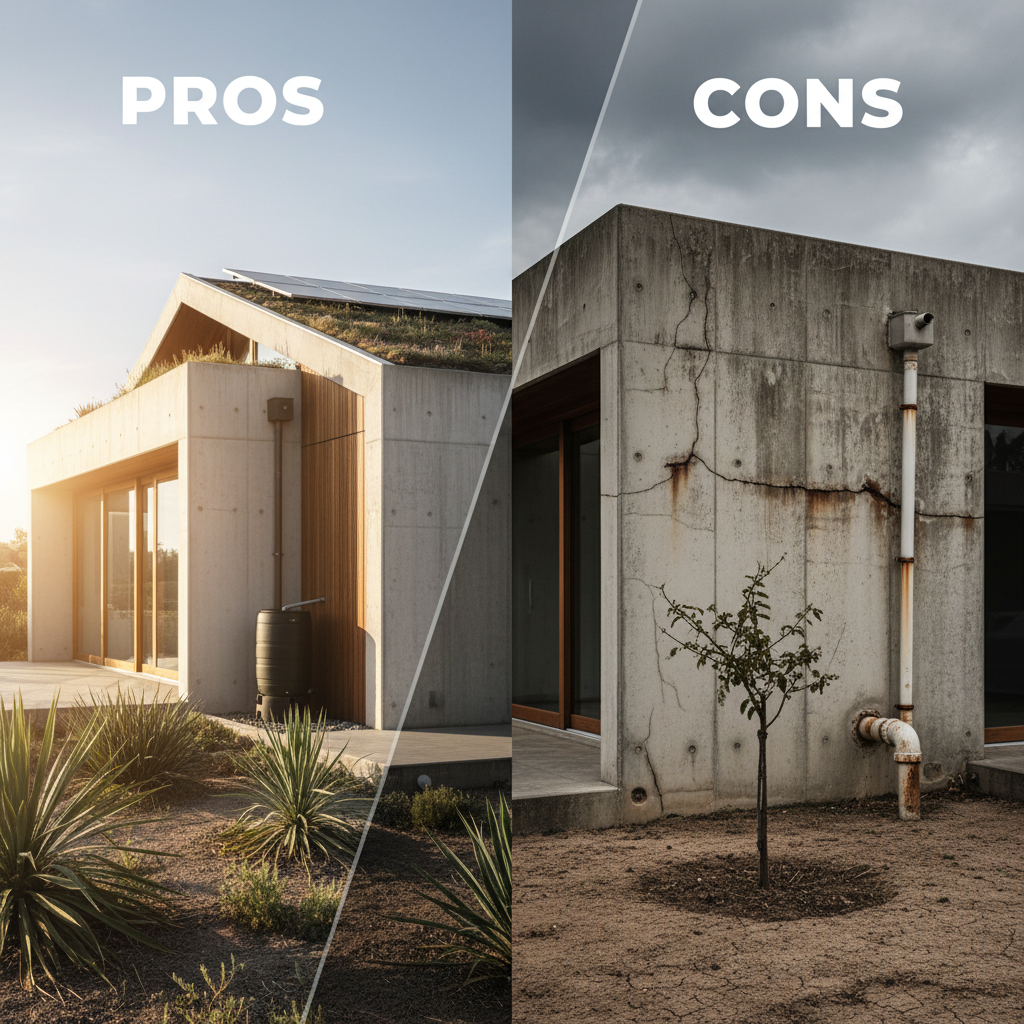
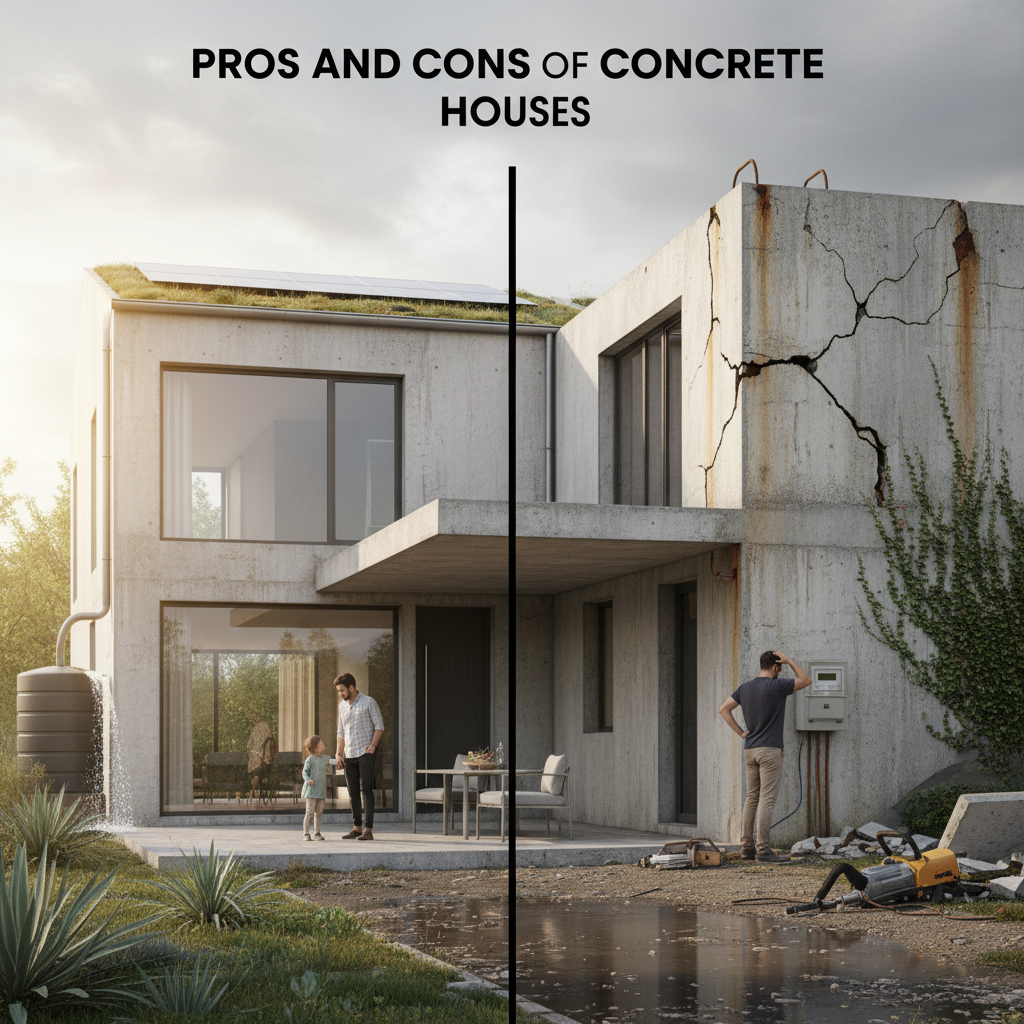
Balance the trade-offs now. The pros and cons of concrete houses involve a complex balance of physics and finance. On the positive side, you get unmatched durability of concrete houses. These structures are dense and heavy. They provide a level of security that wood can’t replicate. You also benefit from massive energy savings due to thermal mass. But the downsides are real. The initial investment is higher. Finding a qualified contractor can be difficult in certain regions. You also have less flexibility for future renovations. Cutting through a concrete wall to add a window is a massive undertaking compared to sawing through drywall and studs.
Disaster Resistant Concrete Homes and Safety
Nature is getting louder. Safety is the primary driver for many homeowners. Disaster resistant concrete homes are the gold standard for survival in volatile regions. If you live in a hurricane zone or a wildfire-prone area, concrete is your best friend. It doesn’t burn. It doesn’t blow away. The National Association of Home Builders (NAHB) consistently highlights concrete’s ability to withstand 200-mph winds. While your neighbors might lose their roofs in a storm, a concrete house stays rooted. It’s a fortress for your family. This peace of mind is often the deciding factor for those in high-risk zones.
Concrete Home Benefits for Soundproofing and Privacy
Silence is a luxury. Noise pollution is a modern plague. Standard wood walls allow sound to travel freely between rooms and from the street. Concrete home benefits for soundproofing are a direct result of the material’s density. Concrete has a much higher Sound Transmission Class (STC) rating than wood and fiberglass. It blocks low-frequency rumbles and high-frequency screeches with equal ease. You won’t hear the neighbor’s lawnmower. You won’t hear the highway traffic. It creates a silent, library-like atmosphere inside. Your home becomes a true escape from the outside world.
Comparing Residential Build Systems
Data drives smart decisions. When you evaluate the pros and cons of concrete houses, you need a side-by-side breakdown of how these materials actually stack up in the real world. This table illustrates the fundamental differences between traditional wood and advanced concrete solutions.
Criteria
Wood Frame (Standard)
Concrete Block (CMU)
Insulated Concrete Forms (ICF)
Base Cost
Lowest upfront
Moderate
Highest (+10-15%)
Life Expectancy
50 to 80 years
100+ years
Indefinite
Fire Resistance
Low (combustible)
High (non-combustible)
Maximum (4-hour rating)
Energy Efficiency
Moderate (R-13 to R-19)
Low without extras
Excellent (R-22 to R-50+)
Storm Safety
Vulnerable to high winds
High structural mass
Extreme impact resistance
Ease of Repair
High (DIY friendly)
Difficult
Very difficult
Is It Cheaper to Build a House with Concrete or Wood?
Look beyond the bid. Let’s talk numbers. Is it cheaper to build a house with concrete or wood? The short answer is no. On average, building with concrete carries a 5% to 15% premium over traditional wood framing. This extra cost covers the insulated concrete forms cost and the specialized pumps and bracing required. You also have to account for more expensive engineering fees. But looking only at the construction check is a mistake. You have to look at the total cost of ownership. Lower insurance premiums, reduced utility bills, and zero termite treatments change the math. Over ten years, the concrete house often becomes the cheaper option. It’s a classic case of paying more now to save much more later.
How Do ICF and Concrete Block Homes Compare?
Methods matter for performance. Not all concrete houses are built the same way. The ICF vs concrete block home debate is central to modern construction. Concrete blocks, or CMUs, are the traditional method. They’re reliable and widely understood by masons. But they require manual labor and additional insulation layers. Insulated Concrete Forms (ICF) are the modern evolution. These are hollow foam blocks that stack like Legos. You fill them with rebar and wet concrete. The foam stays in place to provide permanent insulation on both sides of the wall. It’s a faster and more efficient way to build a high-performance envelope.
Poured Concrete Walls vs Block Construction
Strength is often monolithic. Structural integrity varies by method. Poured concrete walls vs block construction is a matter of continuity. A poured wall is a single, monolithic slab of stone. It has no seams. This makes it incredibly strong and resistant to water penetration. Block walls have mortar joints. These joints are potential points of failure or leakage over decades. Poured walls are generally faster to install if you have the right equipment. They offer a smoother finish for basement areas. But blocks are easier to transport to remote sites where a concrete truck can’t easily go.
Using Precast Concrete House Panels
Modern speed meets stone. Speed is the main selling point here. Precast panels are manufactured in a controlled factory environment and shipped to your lot. This eliminates many of the delays caused by weather. You can set the entire shell of a house in a matter of days. It reduces on-site waste significantly. You also get a very high-quality finish because the curing happens under perfect conditions. It’s an industrial approach to residential living. If you want to move in fast, precast is the way to go.
Is an Energy Efficient Concrete Home Design Possible?
Buildings can save money. Efficiency isn’t just possible. It’s a core feature. An energy efficient concrete home design relies on thermal mass. Think of concrete as a thermal battery. It absorbs heat during the day and releases it slowly at night. This levels out the temperature swings that force your HVAC system to work overtime. In a wood house, the temperature spikes and drops quickly. In a concrete house, the interior stays remarkably stable. You’ll notice your air conditioner cycles less often. Your heating bills will drop. It’s a passive way to save money every single month.
Building a Concrete House in Cold Climates
Snow reveals every flaw. Building a concrete house in cold climates requires a focus on thermal bridging. Traditional wood studs act as bridges that let heat escape. ICF construction solves this by providing a continuous layer of foam insulation. There are no gaps. There are no cold spots. Even in sub-zero temperatures, the interior walls remain warm to the touch. It creates a level of comfort that’s hard to describe until you feel it. You won’t feel those annoying drafts near the baseboards anymore. It’s a total seal against the elements.
Indoor Air Quality in Concrete vs Wood Homes
Health starts with walls. What you breathe matters. Concrete is an inorganic material. It doesn’t off-gas harmful chemicals like some treated lumber or glues used in engineered wood products. This leads to better indoor air quality for your family. But do concrete houses have mold problems? Not if they’re designed correctly. Mold needs organic food like paper or wood to grow. Concrete provides no sustenance for mold spores. As long as you manage humidity with a proper ventilation system, your home will remain a clean environment. It’s a massive win for people with allergies or asthma.
How Can You Achieve Modern Concrete Home Aesthetics?
Style meets raw strength. Forget the image of a cold, gray box. Modern concrete home aesthetics are incredibly diverse. You can leave the concrete exposed for a sleek, industrial look. Polished concrete floors are beautiful and nearly indestructible. But you can also dress concrete up. You can apply traditional stucco, brick veneer, or fiber cement siding. From the street, no one has to know your house is made of concrete. You get the strength of a fortress with the look of a designer estate. It’s the best of both worlds. You can even use stamped concrete to mimic the texture of wood or stone on the exterior walls.
How Does Concrete Impact Residential Home Resale Value?
Value anchors your wealth. Your home is your biggest investment. Concrete houses hold their value exceptionally well. Buyers in 2026 are increasingly savvy about climate risks. They want homes that are built to last. A concrete structure is a major selling point during an appraisal. It signals quality and low maintenance. You’ll also see a direct impact on your homeowners insurance premiums. Many carriers offer significant discounts for non-combustible, wind-resistant homes. These annual savings add up over time. When it’s time to sell, your home will stand out as a premium, low-risk option in a sea of standard wood houses.
Do Concrete Houses Have Mold Problems or Moisture Risks?
Physics governs the interior. Moisture is the enemy of any building. People often ask, do concrete houses have mold problems? The answer is a firm no, provided you handle the science of the build. Concrete itself is inorganic. It won’t rot. It won’t feed mold. However, concrete walls are very airtight. This is great for efficiency but means that indoor moisture from cooking and showering has nowhere to go. You must use a balanced ventilation system like an ERV or HRV. These systems swap stale indoor air for fresh outdoor air while keeping the heat inside. If you skip this, you might get condensation on your windows. Do it right, and your home stays bone-dry and healthy.
What Are the Smart Home Integration Challenges in Concrete Builds?
Planning prevents wireless failure. Concrete is a beast for wireless signals. It acts like a Faraday cage. This can lead to dead zones for Wi-Fi and cellular service. If you’re building a modern home, you have to plan for this. You can’t just stick a router in the closet and hope for the best. The signals won’t penetrate the thick, reinforced walls easily. It’s a hurdle, but it’s one you can clear with a little foresight during the design phase.
Optimizing Mesh Network Placement
Connectivity requires a map. A mesh network is mandatory. You’ll need multiple access points throughout the house. Each node should have a clear line of sight to the next or be connected via a wired backhaul. By placing nodes strategically, you can blanket the house in high-speed internet. You’ll want to place these near doorways or open hallways where the signal can travel more freely. It ensures your smart devices stay connected without lag. You just have to be more intentional about the layout than you would in a wood-framed house.
Pre-Wiring for Smart Home Infrastructure
Copper beats the air. Don’t rely on wireless for everything. The best time to handle tech is before the concrete is poured. You should run conduits for Cat6 or Cat7 ethernet cables to every room. Put them in the walls. Put them in the ceiling for security cameras. Once that concrete sets, adding a new wire is a nightmare. Pre-wiring gives you a rock-solid foundation for any future smart home tech. It’s about future-proofing your infrastructure. You want a home that’s as smart as it is strong.
How Does Concrete Support Sustainable and Eco-Friendly Living?
Earth requires long-term thinking. Sustainability is about the long game. Concrete is often criticized for the carbon footprint of cement production. This is a fair point. But you have to look at the entire life cycle. A concrete house doesn’t need to be rebuilt every 60 years. It doesn’t require toxic chemical treatments for pests. Modern mixes also use industrial byproducts like fly ash to reduce cement content. When you factor in the massive energy savings from the energy efficient concrete home design, the environmental impact looks much better. You’re reducing the total resources consumed over a century. That’s true sustainability.
Nature assists your HVAC. Thermal mass also plays a huge role in passive solar design. You can position your concrete walls to soak up the low winter sun. This heat then radiates back into the living space at night. It’s a natural, free way to stay warm. You’re using the building’s own weight to manage your climate. Fewer repairs and replacements mean less waste in landfills. It’s a responsible choice for the planet and your wallet.
Is Concrete the Right Material for Your Next Build?
Choose your legacy carefully. Concrete isn’t for everyone. If you’re looking for the absolute cheapest way to get a roof over your head, stick with wood. But if you’re looking for a legacy, the pros and cons of concrete houses lean heavily toward the pros. You get a home that’s quiet, safe, and incredibly efficient. You get a structure that can survive the worst that nature throws it. It’s a premium product for a homeowner who values performance over tradition. You’ll sleep better knowing your walls are solid stone. Your energy bills will reflect the intelligence of your choice. It’s time to stop building temporary houses. It’s time to build for the future. Reach out to a specialized ICF or concrete contractor today to get a real-world quote for your project. Your dream home deserves a foundation that lasts forever.
Frequently Asked Questions
What is the most significant disadvantage of building with concrete?
Cost is the barrier. The upfront price tag for concrete construction typically sits 10 to 15 percent higher than standard wood framing. This premium pays for specialized crews, heavy equipment, and the raw volume of liquid stone. And modifying the layout later creates a massive logistical headache compared to simple wood renovations. You must commit to your floor plan from day one. It is permanent. It is final.
Will my Wi-Fi work inside a concrete house?
Signals struggle here. Steel-reinforced concrete walls effectively block radio frequencies and cellular signals across every room. You cannot rely on a single central router to provide coverage for the entire floor plan. Professionals solve this by installing a wired mesh network with access points in every major living area. But plan ahead. Hardwiring these nodes is much easier during the initial build than after. It works perfectly. You just need a plan.
Are concrete homes actually fireproof?
Stone does not burn. While no structure is entirely indestructible, disaster resistant concrete homes offer the highest fire ratings in residential construction. Most concrete walls can withstand intense flames for up to four hours without structural failure. This buys your family critical time during an emergency that wood houses simply cannot offer. Your insurance agent will love it. Your family will be safer. It is the ultimate shield.
How do I prevent moisture buildup in an airtight concrete home?
Ventilation is the secret. Because concrete shells are extremely airtight, they do not breathe like drafty wood homes do. You must install an Energy Recovery Ventilator (ERV) to manage humidity and provide a constant stream of fresh air. Without this system, moisture from showering and cooking can get trapped and cause window condensation. But with it, the air stays crisp. It stays dry. You control the climate through technology.
Can I hang pictures on concrete walls without a drill?
Surface prep matters. Hardened concrete is far too dense for a standard hammer and nail to penetrate. You will need to use adhesive hooks or specialized masonry anchors if you want to hang art or mirrors. Many homeowners choose to add a layer of furring strips and drywall over the concrete to make decorating easier. It looks standard. It feels normal. You just have a fortress hiding behind the paint.
Is it harder to get a mortgage for a concrete house?
Lenders like stability. Appraisers may occasionally struggle to find comparable sales in neighborhoods dominated by wood, but concrete is a low-risk asset. Banks recognize the durability of concrete houses as a hedge against future property damage and loss. You might actually find it easier to secure favorable terms for a high-performance build. It represents a safer bet. It holds its value. The market respects quality.
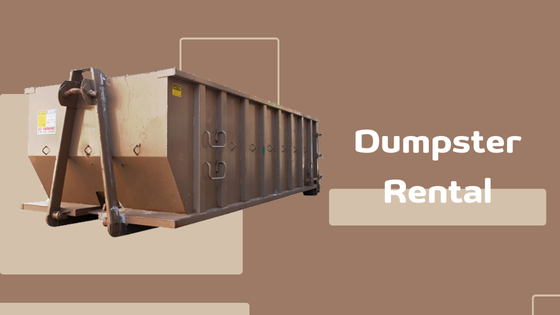
If you’re located in Warren, Ohio, and you’ve ever dealt with the hassle of waste management during a home renovation, construction project, or major clean-up, you likely understand the importance of having an efficient solution. A1 Dumpster Rental Warren Ohio provides the perfect answer to these challenges with comprehensive services designed to make the entire waste disposal process as simple and stress-free as possible.
Affordable and Reliable Services
A1 Dumpster Rental Warren Ohio takes pride in offering reliable and affordable dumpster rental services across Warren and its surrounding areas. Their focus is on delivering hassle-free, cost-effective waste management solutions suitable for both residential and commercial needs. Whether you’re engaged in a minor cleanout or handling a large-scale construction site, they ensure that waste disposal is one worry you can cross off your list.
Years of Expertise
With years of experience in the waste management industry, the team at A1 Dumpster Rental Warren Ohio understands the intricacies involved in keeping projects organized and efficient. Their mission is geared towards providing the best customer experience by offering prompt, reliable, and environmentally responsible services. This includes offering a diverse array of dumpster sizes, flexible rental periods, and transparent pricing to cater to the needs of every project, large or small.
Customized Solutions
A1 Dumpster Rental Warren Ohio is known for its customized approach to waste management. They offer a range of dumpster sizes, from the small 10-yard bins used for minor cleanouts to the large 40-yard containers ideal for major construction projects. This range ensures that whether you are conducting a simple garage declutter or managing a massive renovation, there is a dumpster size that perfectly fits your needs.
Residential and Commercial Options
For residential clients, A1 Dumpster Rental Warren Ohio provides solutions ideal for home cleanouts, spring cleaning, and small renovation projects. Their commercial dumpster rentals are suitable for businesses undergoing office cleanouts or needing regular waste removal services. Additionally, their construction dumpster rentals are tailored for construction debris, large-scale renovations, and demolition projects, making them a trusted partner in construction waste management.
Specialty Services and Flexibility
Understanding that every project’s needs are unique, A1 Dumpster Rental Warren Ohio offers specialty services, including same-day delivery and flexible rental periods. This flexibility allows customers to plan their waste management around their project timelines, providing convenience and peace of mind.
Expert Guidance and Customer Support
Uncertain about what dumpster size fits your needs? No problem. A1 Dumpster Rental Warren Ohio offers expert guidance to help you choose the perfect size so you can avoid extra costs associated with incorrect sizing. Their team is always ready to assist in making sure all your questions about waste disposal are answered, and their customer support promises a smooth rental experience.
Environmental Responsibility
A1 Dumpster Rental Warren Ohio is not just about providing dumpsters, they are committed partners in keeping Warren and its surrounding communities clean and green. They emphasize responsible waste management practices, ensuring that all waste collected is disposed of or recycled in an environmentally friendly manner.
In Conclusion
A1 Dumpster Rental Warren Ohio offers a comprehensive solution for all your waste disposal needs, combining affordability, reliability, and environmental responsibility. Whether you need a small 10-yard dumpster for a home project or a large 40-yard container for a commercial cleanout, they have you covered with services you can trust.
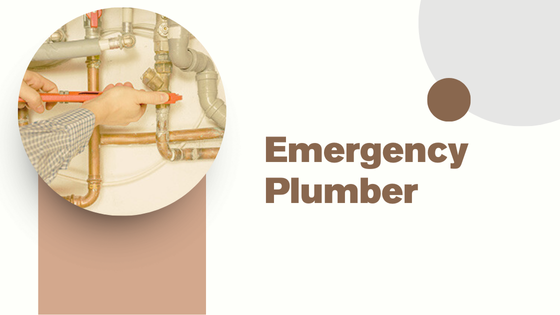
When a plumbing emergency strikes, the last thing you want is to be caught unprepared. From burst pipes to overflowing toilets, these unexpected situations can cause significant damage if not addressed promptly. Therefore, finding a qualified local emergency plumber in Portsmouth, UK, is crucial for ensuring that any plumbing issues are resolved quickly and efficiently.
Why You Need an Emergency Plumber
Plumbing emergencies can happen at any time, day or night. These situations often require immediate attention to prevent water damage, mold growth, or other serious consequences that can affect the structural integrity of your home. A blocked drain in the middle of the night, a broken water heater on a freezing morning, or a sewer backup during a weekend gathering are all instances where waiting for regular business hours simply isn’t an option.
What to Look for in a Qualified Emergency Plumber
24/7 Availability
A reliable emergency plumber should be available around the clock. Plumbing issues don’t work on a 9 to 5 schedule, and neither should your plumber. When evaluating your options, make sure the plumbing service offers 24/7 emergency services.
Local Expertise
A local plumber will be familiar with the unique plumbing issues that can affect homes in Portsmouth. They will understand common problems in the area and are more likely to carry the parts needed to fix those problems. Additionally, a local plumber can arrive at your home more quickly, which is especially important during an emergency.
Qualified and Certified
Ensure the plumber you hire is fully licensed and insured. In the UK, plumbers must have the necessary qualifications and abide by local regulations, which guarantees that you are receiving knowledgeable and trustworthy service. Insurance provides protection in the case of accidental damage during repair work.
Experience and Reputation
Look for a plumber with several years of experience in emergency repairs. Experience translates to a better understanding of complex problems and efficient solutions. Check reviews and ask for references to gauge the plumber’s reputation in the Portsmouth community.
Transparent Pricing
Emergency plumbing can be costly, but a reputable plumber will provide clear, upfront pricing without hidden fees. This transparency allows you to make an informed decision, even in a stressful situation. While it may be tempting to go for the cheapest option, remember that quality work can save you money in the long run by preventing future issues.
TCA Emergency Solutions
When looking for a qualified local emergency plumber in Portsmouth, TCA Emergency Solutions is the name you can trust. Recognized as the best emergency plumber in Portsmouth, TCA Emergency Solutions provides top-notch 24/7 emergency services. Their team of highly qualified and certified plumbers ensures that whatever plumbing emergency you face, they are ready to resolve it swiftly and effectively.
What sets TCA Emergency Solutions apart is their deep local expertise and understanding of the common plumbing issues that homeowners in Portsmouth encounter. This local knowledge, combined with their commitment to having necessary parts on hand, allows for quicker and more efficient service.
TCA Emergency Solutions prides itself on its transparent, upfront pricing with no hidden fees. They believe in providing high-quality work at fair prices, which has earned them an impressive reputation within the Portsmouth community.
Preparing for an Emergency
Even if you don’t currently have a plumbing issue, it’s wise to locate a qualified emergency plumber in advance. Keeping TCA Emergency Solutions’ contact information handy ensures that you and your household are prepared should a plumbing emergency arise. Familiarize yourself with the main water shut-off valve in your home so you can minimize damage in the event of a major leak.
Conclusion
Finding a qualified local emergency plumber in Portsmouth, UK, before you need one can bring peace of mind and protect your property from severe damage. By choosing TCA Emergency Solutions, you are opting for a service known for its availability, local expertise, qualifications, experience, and transparent pricing. By doing your homework ahead of time, you’ll be prepared to handle any plumbing emergency swiftly and effectively.